
01 · The city
Why Naples belongs on your Italy itinerary
Naples feels lived-in because it is. The monumental churches and palaces are not a separate museum district: they share streets with produce shops, university bars, shrines, tailors and apartment balconies. Its historic centre preserves a street plan with roots in the ancient Greek city and layers of Roman, medieval, Spanish and Bourbon Naples.
The city also makes an unusually complete base. You can spend a morning with Caravaggio or Roman mosaics, eat one of Italy’s most influential lunches, watch sunset over Vesuvius, and board a ferry or train for Pompeii, Procida or Sorrento the next day.
History without glass
Ancient lanes, cloisters, castles and churches remain part of the everyday city.
A serious food capital
Pizza is the headline, but pasta, fried snacks, pastry and coffee make the full story.
A bay at your feet
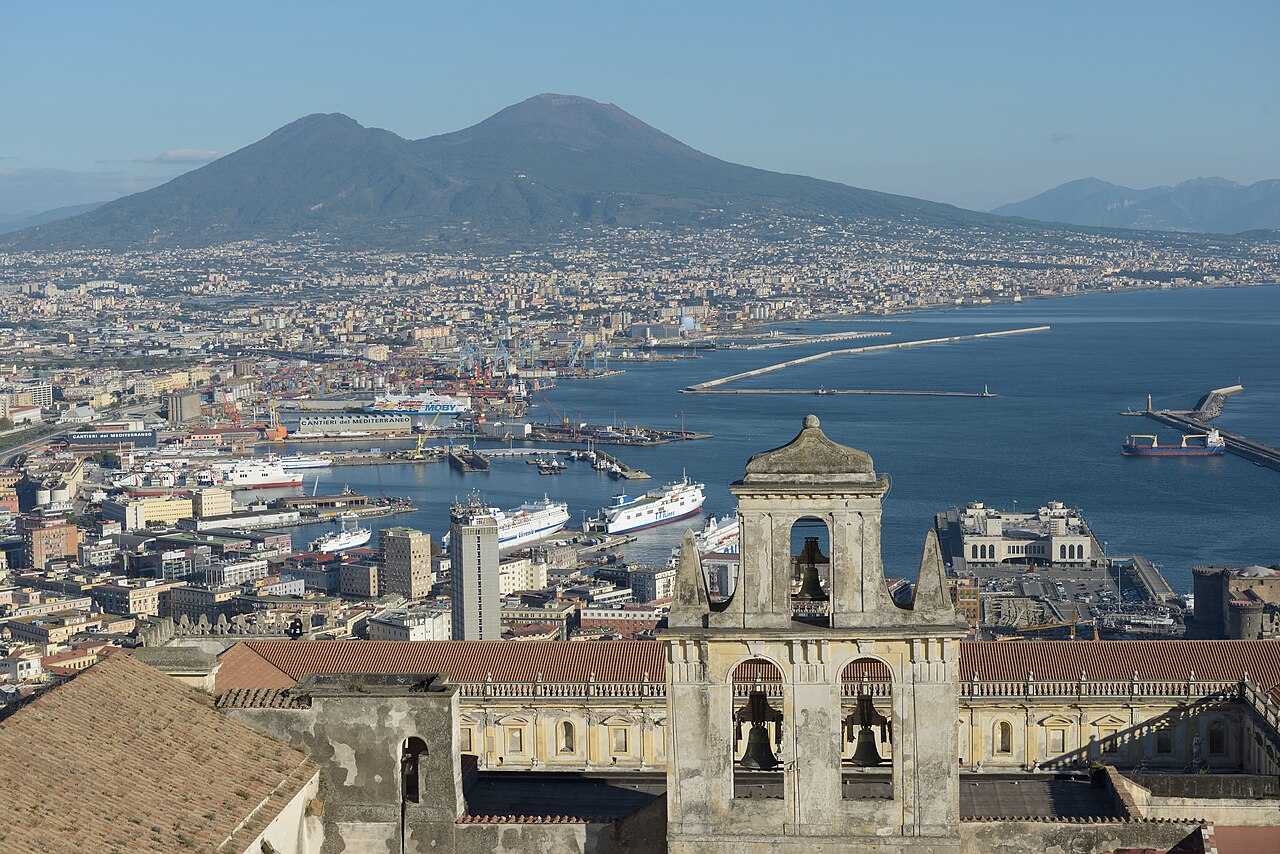
The lungomare opens the dense city to sea air, islands and a famous volcanic horizon.
Day trips that matter
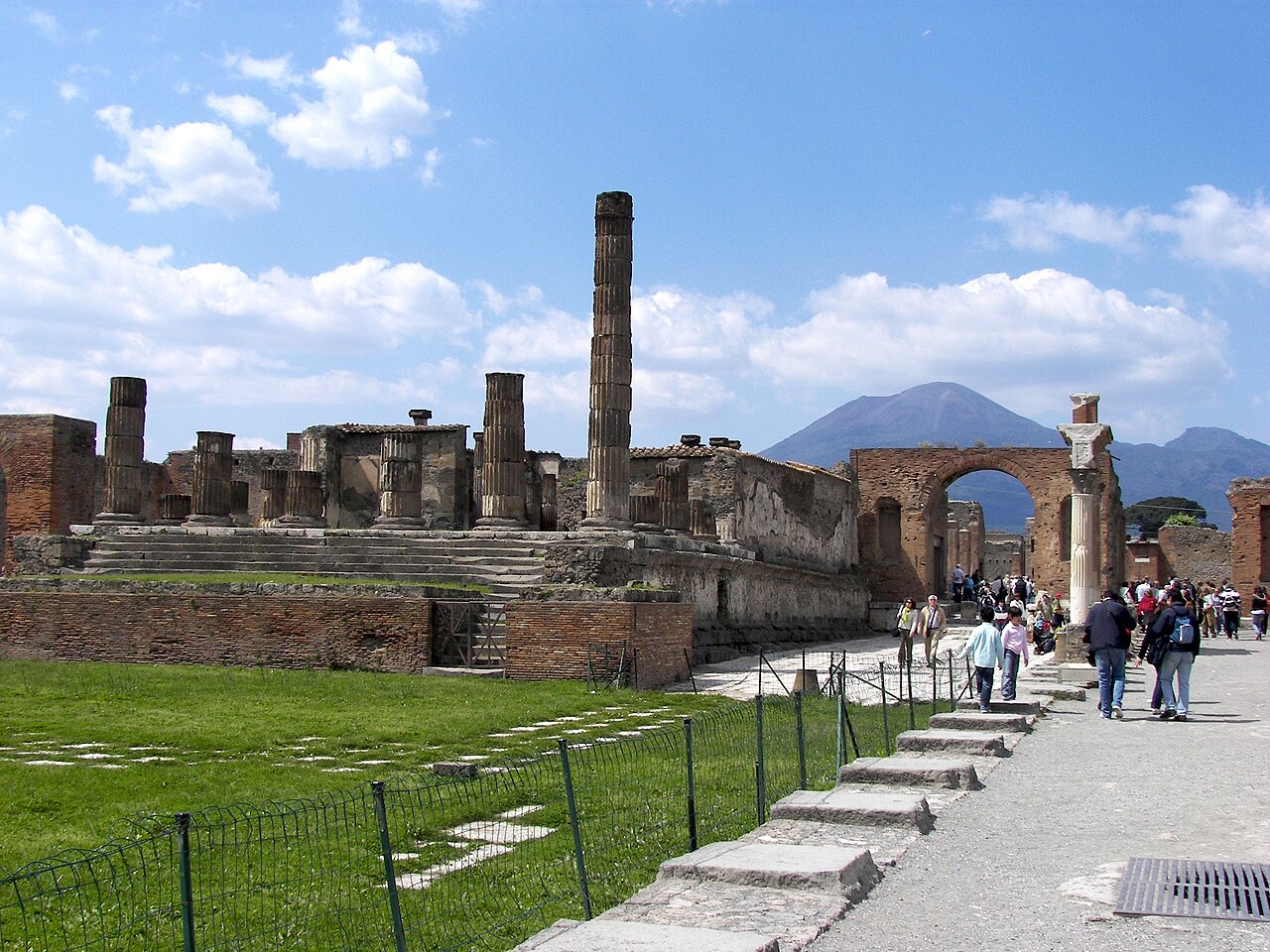
Pompeii, Herculaneum, Vesuvius and the islands are all realistic additions to a city stay.
02 · Seasons
The best time to visit Naples
For comfortable walking, spring and early autumn are the easiest all-round choices. Summer brings long evenings and easy island days, but also heat, stronger sun and larger crowds at the region’s headline sights. Winter is quieter, more local and well suited to museums, churches and long lunches; pack for changeable rain.
- March–MayMild walking weather, lengthening days and a city in full colour. Easter periods can be busy.
- June–AugustBest for combining Naples with beaches or islands. Plan outdoor sights early and take a slow midday break.
- September–OctoberWarm sea, softer light and excellent city weather, with busy weekends still possible.
- November–FebruaryQuieter streets and a stronger neighbourhood rhythm. Ideal for food, art and archaeology.
03 · Trip length
How many days do you need?
One day: the vivid introduction
Walk Spaccanapoli, see the Duomo and one major cultural sight, eat pizza, cross the monumental centre and finish by the sea. It will be thrilling, but you will only skim the surface.
Two days: the city essentials
Add the National Archaeological Museum, Quartieri Spagnoli, Toledo and either the waterfront or Vomero. Two days is enough to understand the city’s contrasts.
Three days: the sweet spot
Three days leaves room for Sanità, an underground visit, Santa Chiara, a market and unhurried meals. This is our recommended minimum for a first trip.
Four days or more: city plus Campania
Keep three days for Naples and use the rest for Pompeii, Herculaneum, Vesuvius or one island. See our one-, two- and three-day itineraries and day-trip planner.
04 · First visit
Ten Naples experiences worth your time
- Walk Spaccanapoli. Follow the ruler-straight line through the historic centre, stopping whenever a courtyard, workshop or bell tower wins.
- Enter the Duomo. The cathedral and Chapel of San Gennaro are central to the spiritual story of Naples.
- Book the Cappella Sansevero. The Veiled Christ is one of the city’s most sought-after visits; reserve ahead through the official museum.
- See ancient Campania at MANN. The National Archaeological Museum gives Pompeii and Herculaneum their essential context.
- Pause in Santa Chiara. Its majolica-tiled cloister is a quiet counterpoint to the noise of the surrounding streets.
- Descend underground. Several organised sites reveal cisterns, tunnels, Roman remains and the city’s wartime layers.
- Ride Metro Line 1. Stations including Toledo turn an ordinary journey into a public-art route.
- Climb to Vomero. Castel Sant’Elmo and the Certosa di San Martino offer the clearest lesson in Naples’ geography.
- Walk the lungomare. The route around Santa Lucia and Castel dell’Ovo is made for golden-hour views.
- Eat beyond the headline. Try pizza, of course—but also pasta alla Genovese, a frittatina, sfogliatella and a quick counter espresso.
05 · Transport
Getting around without wasting the day
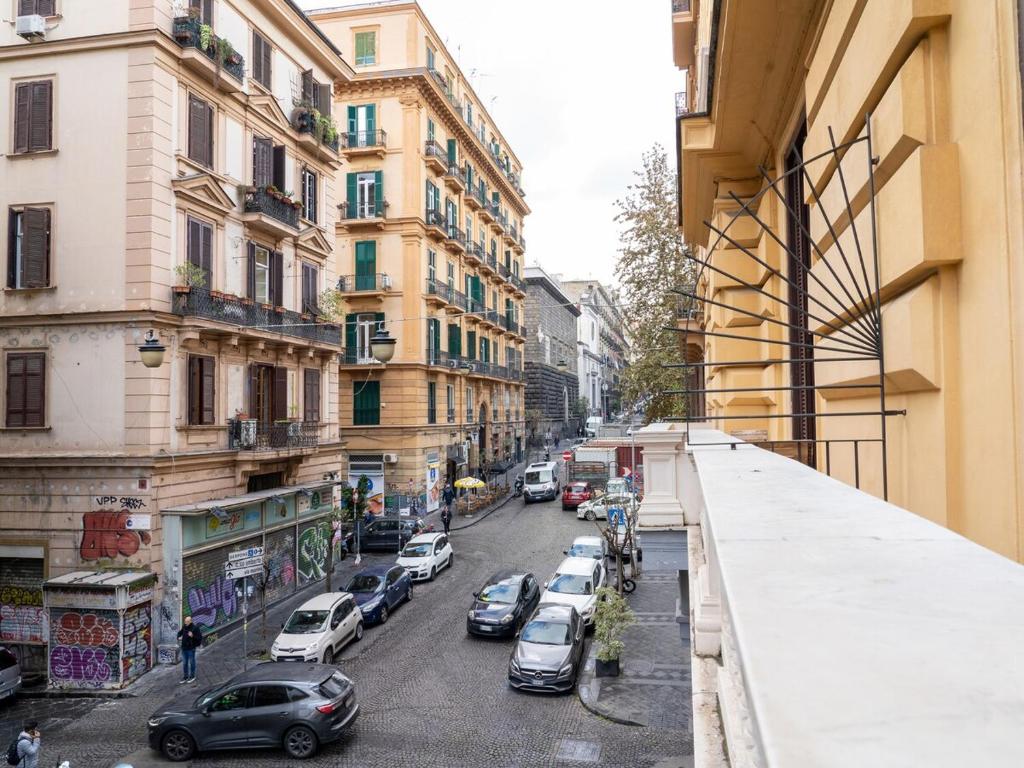
Walk within the historic centre. The lanes are compact, traffic can be slow and the interesting route is rarely the straightest one. Comfortable shoes matter more than ambitious daily mileage: paving is uneven and the city includes steep climbs.
Metro Line 1 handles the longer cross-city hops. Duomo station is just outside Palazzo Nanà; Garibaldi serves the central rail station, Municipio the port and funicular area, Toledo the Spanish Quarters, and Vanvitelli the upper city. Funiculars are useful for Vomero, while ferries connect the bay’s islands and coastal towns.
06 · Practical Naples
Know before you go
Cross with attention
Use marked crossings where possible, make eye contact and expect scooters in narrow lanes. Do not step out while looking at your phone.
Reserve the small icons
Cappella Sansevero and popular archaeological time slots can sell out. Book official tickets, especially at weekends.
Carry a little cash
Cards are common, but coins and small notes are useful for markets, tiny cafés and low-value purchases.
Stand at the bar
A quick espresso at the counter is the local rhythm. Table service may be priced differently in tourist-heavy locations.
Plan less per hour
Queues, steep streets and irresistible detours are part of Naples. Group sights by neighbourhood.
Use city habits
Keep phones and wallets secure in crowds, close bags on public transport and leave valuables out of sight.
07 · From our door
A low-stress first afternoon
Begin at Piazza Nicola Amore and walk north to the Duomo. Continue into Via dei Tribunali, then turn through San Gregorio Armeno and down the narrow line of Spaccanapoli. Pause at Santa Chiara, take an espresso near Piazza del Gesù, and continue toward Via Toledo.
If energy holds, emerge at Piazza del Plebiscito and follow the air downhill to the lungomare. If it does not, take Metro Line 1 from Toledo back to Duomo. Either way, keep dinner close to home: the historic centre rewards a second, slower walk after dark.
08 · Quick answers
Naples travel FAQ
How many days do I need in Naples?
Three days is ideal for a first visit. It gives you two days across the historic centre, museums, viewpoints and waterfront, plus time for a slower neighbourhood or an underground site.
Is Naples walkable?
Very much so in the historic centre. Use Metro Line 1, funiculars and ferries for longer journeys, steep climbs and trips across the bay.
What should I book in advance?
Prioritise the Cappella Sansevero, major guided underground visits, Pompeii time-sensitive plans and ferries during busy summer weekends. Always book through official providers when possible.
Where is the best area for a first stay?
The historic centre places you close to the Duomo, Spaccanapoli, Via dei Tribunali and many classic food stops. Duomo Metro makes the station, port and wider city easy to reach.
Can I visit Pompeii from Naples?
Yes. Pompeii is one of the region’s most practical day trips by rail. Leave early, check the official archaeological park for current access information and protect yourself from sun and heat.
09 · Plan responsibly
 Eat well
 Go further
 Move like a local
 Arrival day