
01 · Our neighbourhood
Centro Storico, Pendino & Duomo
Feel: ancient, theatrical, busy, irresistible. Best for: first visits, food, churches and being able to walk nearly everywhere.
The UNESCO-listed centre follows the lines of the ancient city. Spaccanapoli and Via dei Tribunali organise the maze; side streets bring workshops, university life, courtyard palaces and neighbourhood shrines. The Duomo, Sansevero, Santa Chiara and San Gregorio Armeno sit within this dense fabric.
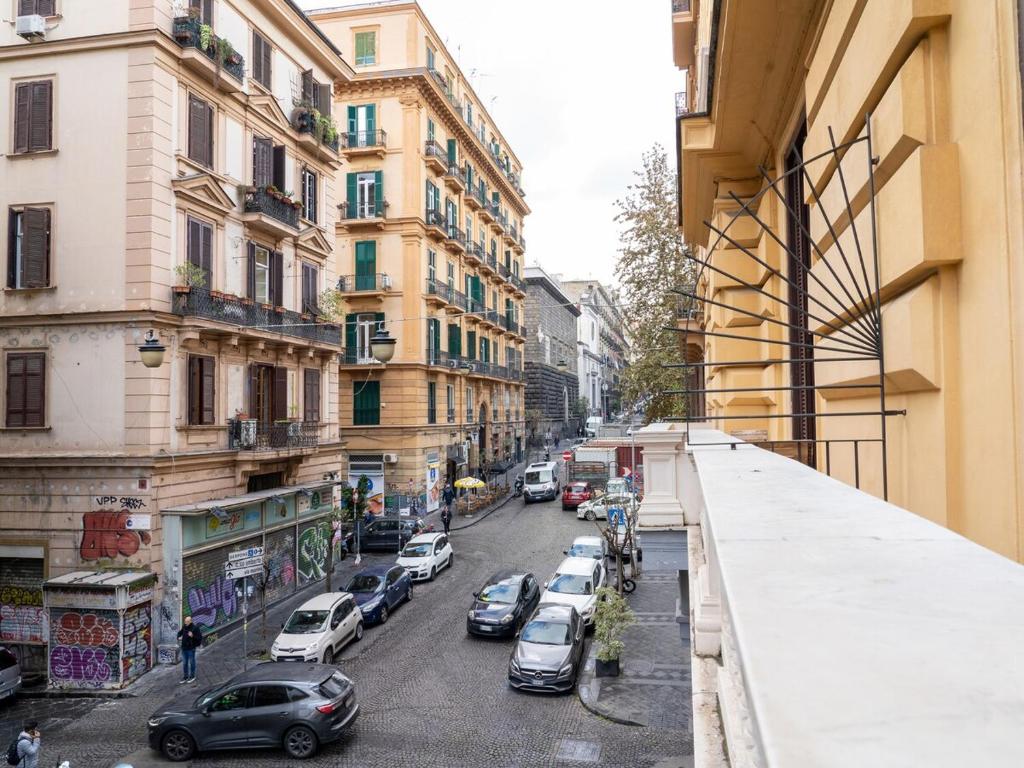
Holidays a Napule is at Piazza Nicola Amore, on the southern edge of the old centre. This position is useful: you are close to the energy, but also beside Duomo Metro for Garibaldi, Toledo, Municipio and Vomero.
A natural route
Duomo → Via dei Tribunali → San Gregorio Armeno → Spaccanapoli → Santa Chiara → Piazza Bellini. Do it slowly, with one reserved sight and several unscheduled stops.
02 · West of Toledo
Quartieri Spagnoli & Montecalvario
Feel: vertical, close-packed and extroverted. Best for: street life, trattorias, football culture and lively evenings.
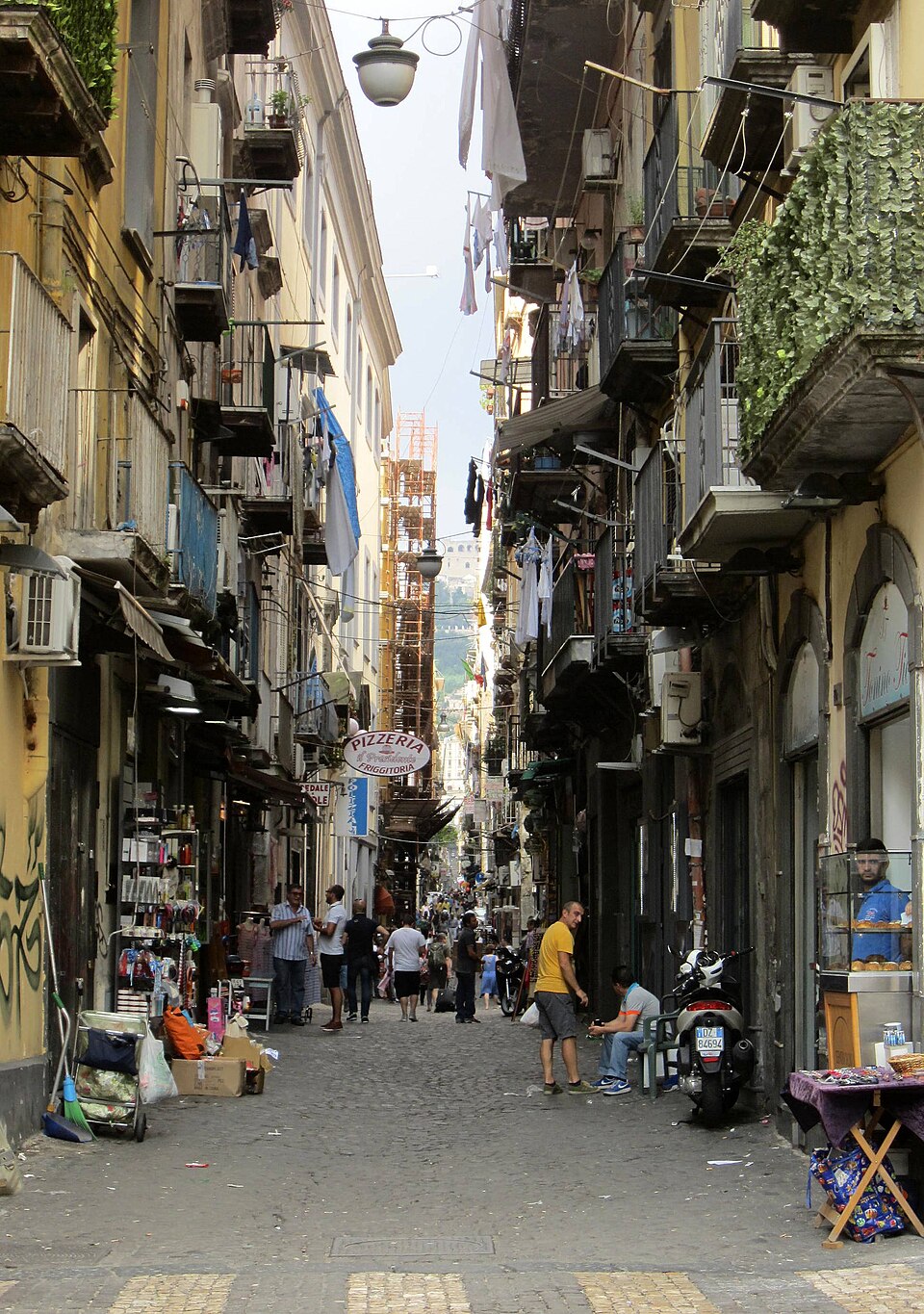
The Spanish Quarters climb steeply from Via Toledo in a tight military-era grid. Laundry, scooters, shrines, murals and tiny dining rooms create the visual Naples many visitors expect. The area is no longer hidden from tourism, but daily life still drives its rhythm.
Enter from Toledo Metro, then climb rather than only tracing the flat edge. Visit earlier in the day to see shops and neighbourhood routines; return in the evening for food and drinks. Respect residential lanes and avoid turning private doorways into photo sets.
03 · North of the centre
Rione Sanità
Feel: layered, creative and proudly local. Best for: catacombs, Baroque architecture, community projects and pastry.
Sanità developed in a valley beneath royal routes and over ancient burial grounds. Its landmarks include the Catacombs of San Gennaro, Catacombs of San Gaudioso, Palazzo dello Spagnolo and the theatrical staircases of historic palaces.
Do not visit only for the underground. Walk Via Vergini, see the market, stop for a fiocco di neve and notice how cultural initiatives have created work around the district’s heritage. Visit in daylight and follow the main routes between planned stops.
04 · Elegant Naples
Chiaia, Santa Lucia & the lungomare
Feel: polished, open and maritime. Best for: shopping, aperitivo, waterfront walks and a gentler evening.
Chiaia unfolds between the monumental centre and Mergellina with boutiques, cafés and residential streets. Below, Santa Lucia and the lungomare pull the city toward the bay. Castel dell’Ovo and Borgo Marinari make a natural focal point.
Pair a walk through Via Chiaia and Piazza dei Martiri with the seafront near sunset. This is where the dense old city suddenly opens to Capri, Vesuvius and sea air.
05 · The upper city
Vomero & San Martino
Feel: residential, breezier and panoramic. Best for: views, Art Nouveau details, quieter shopping and sunset.
Vomero occupies the hill above central Naples and feels like a different city. The essential pair is Castel Sant’Elmo and the Certosa di San Martino, whose terraces explain the geography of everything below.
Use Metro Line 1 to Vanvitelli or one of the funiculars, then walk downhill where possible. Save the steep stair routes for comfortable shoes and dry weather.
06 · West along the bay
Mergellina & Posillipo
Feel: coastal, scenic and spacious. Best for: long seafront walks, villas, views and slower afternoons.
Mergellina extends the waterfront beyond Chiaia, while Posillipo rises around coves and panoramic roads farther west. The area rewards travellers who have already covered the central essentials and want the bay to set the pace.
Public transport and taxis are more useful here than in the old centre. Check access and opening information for archaeological parks, beaches and villas before making a special journey.
07 · Eastern gateway
Garibaldi, Porta Nolana & Mercato
Feel: kinetic, practical and multicultural. Best for: transport connections, morning markets and everyday food.
Piazza Garibaldi is the city’s rail and transit gateway rather than its prettiest square. South and west, Porta Nolana and Mercato offer seafood, produce, working streets and important churches. Travellers who enjoy cities as they function—not only as they pose—will find much to notice.
Come in the morning, keep normal station-area awareness and connect the market area back toward Piazza Nicola Amore and the historic centre.
08 · Quick match
Which Naples area fits your day?
- First morningCentro Storico: the Duomo, ancient streets and one booked masterpiece.
- Best sunsetVomero for a high panorama; the lungomare for sea-level colour.
- Food crawlHistoric centre for variety; Pignasecca and Quartieri Spagnoli for a lively westward loop.
- Quiet contrastSanta Chiara’s cloister, Capodimonte park or the upper streets of Vomero.
- Living cultureSanità with its catacombs, community-led heritage and morning market.
- Elegant eveningChiaia, Via Partenope and Borgo Marinari.
 Connect the areas
 Arrive smoothly